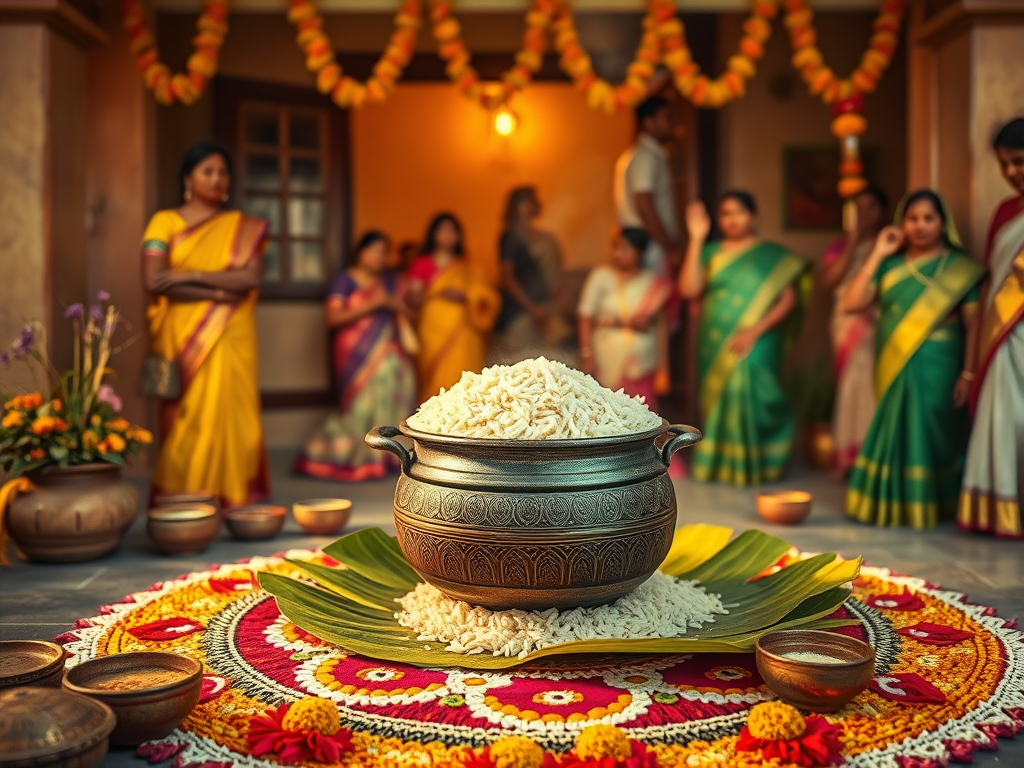
Pongal, the vibrant harvest festival of South India, is a time of joy, gratitude, and cultural richness. Celebrated annually in mid-January, Pongal marks the beginning of the Tamil month Thai and is dedicated to the Sun God, symbolizing prosperity and the blessings of nature. Rooted in agriculture, it is an expression of thanks for a bountiful harvest and an auspicious start to new endeavors.
The Significance of Pongal
Pongal is more than a festival—it’s a reflection of Tamil culture, its agricultural roots, and its reverence for nature. The term “Pongal” means “to boil over,” representing abundance and prosperity. The festival spans four days, each with its unique traditions:
- Bhogi (Day 1):
The festival begins with Bhogi Mantalu, a bonfire where old possessions are discarded, symbolizing renewal. Houses are cleaned, and fresh decorations, such as kolams (rangoli designs), adorn the entrances. - Thai Pongal (Day 2):
The main day of the festival is dedicated to Surya, the Sun God. Families prepare the traditional dish Pongal—made of freshly harvested rice, jaggery, and milk—cooked in new earthen pots. As the pot boils over, people chant “Pongalo Pongal!”, signifying overflowing happiness and prosperity. - Mattu Pongal (Day 3):
This day honors cattle, essential to farming. Cows and bulls are bathed, adorned with colorful beads, flowers, and bells, and fed special treats as a gesture of gratitude for their labor. - Kanum Pongal (Day 4):
The final day is a time for family reunions and community celebrations. People visit relatives, share meals, and express gratitude to nature and each other.
Pongal Traditions and Festivities
- Decorations:
Homes are beautified with intricate kolam designs, made with rice flour and bordered with fresh flowers, symbolizing warmth and hospitality. - Traditional Attire:
Men and women wear new clothes, with women often donning colorful saris and jasmine flowers. - Cultural Activities:
Traditional games like Jallikattu (bull-taming sport) and folk dances add to the festive spirit. - Feasts:
Pongal is a culinary celebration, featuring delicacies like sakkarai pongal, vadai, payasam, and murukku. Meals are often served on banana leaves, emphasizing eco-friendliness.
Pongal and Its Broader Impact
- A Celebration of Gratitude:
Pongal fosters a spirit of appreciation, reminding everyone of the interconnectedness of nature, animals, and humans in sustaining life. - Promotion of Sustainability:
By emphasizing the use of natural elements—like banana leaves, clay pots, and eco-friendly decorations—Pongal highlights the importance of living in harmony with the environment. - Cultural Identity:
Pongal reinforces Tamil traditions and cultural pride, uniting communities through shared rituals and celebrations.
Pongal in Modern Times
Even in urban settings, the essence of Pongal remains unchanged. With growing awareness of environmental conservation, the festival continues to inspire sustainable practices. It serves as a reminder to preserve traditions while embracing modernity.
A Wish for Prosperity and Joy
As the Sun God graces the fields with warmth and light, Pongal reminds us of the blessings of nature and the importance of gratitude. May this festival fill your homes with happiness, your hearts with contentment, and your lives with abundance.
Wishing everyone a very Happy Pongal! Pongalo Pongal!
#HappyPongal #PongaloPongal #HarvestFestival #TamilCulture #Gratitude #NatureAndProsperity #TraditionalFestivals #TamilNaduHeritage #EcoFriendlyCelebrations #Varisound #FullKattu #HospitalityHerald #Wilsonpselvam #WilsonPanneerselvam #2025 #NewBeginnings







 Hospitality Herald
Leave a comment