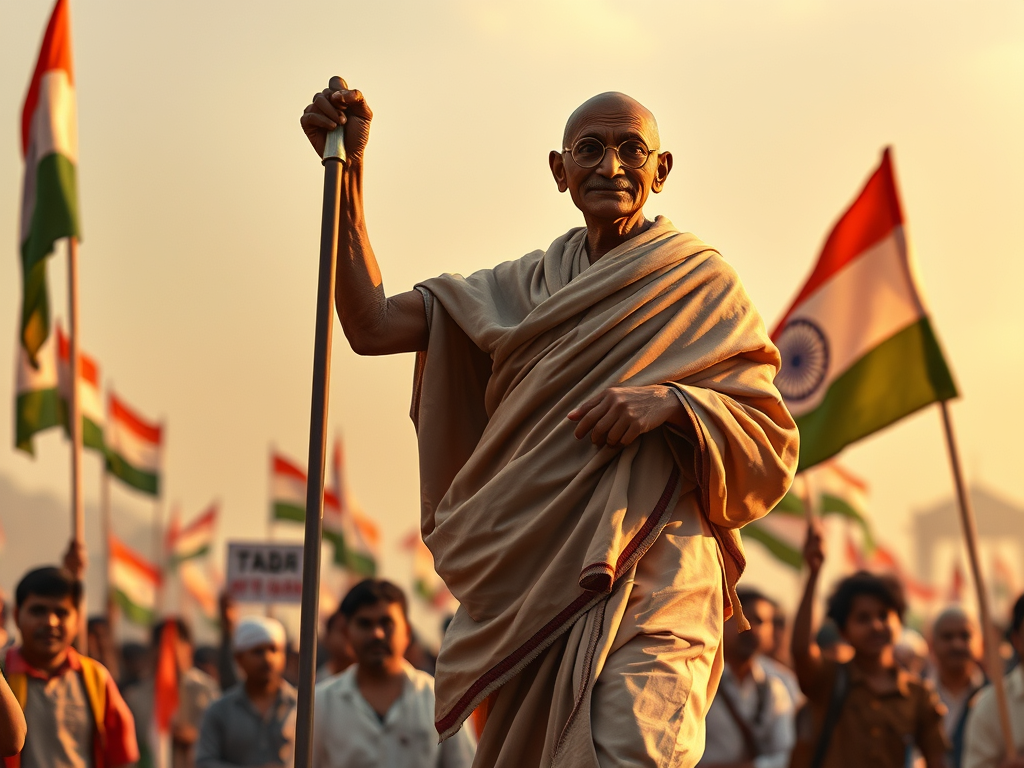
Today, we stand at a poignant crossroads—reflecting on India’s historic cry for freedom in 1942 and grappling with new economic challenges in 2025. These two moments, decades apart, underscore a recurring theme in India’s story: the assertion of autonomy amid adversity.
Quit India Movement: A Defiant Cry for Freedom
- Launched on August 8, 1942, the Quit India Movement was Mahatma Gandhi’s bold call to “Do or Die” — demanding the immediate end of British colonial rule BYJU’S The Indian Express Encyclopedia Britannica.
- Despite swift and brutal suppression—including mass arrests of Congress leaders and forced curfews—the movement galvanized ordinary citizens. Across towns and villages, resistance flourished through both peaceful protests and underground organizing Wikipedia Jagranjosh.com.
- The renewed intensity of civil disobedience triggered a shift in Britain’s approach, ultimately accelerating India’s path to independence in 1947 Wikipedia Encyclopedia Britannica.
2025: Economic Pressures and the Echo of Resistance
Flash forward to today: India is again navigating a test of self-determination—this time on the economic front.
- On August 6, 2025, the U.S. imposed a sharp additional 25% tariff on Indian goods—bringing the total duty to 50%—citing India’s continued purchase of Russian oil amid the Ukraine war Reuters+ 1Indiatimes.
- This move applies significant pressure on key Indian export sectors such as textiles, jewelry, and auto components, while certain essentials like smartphones and pharmaceuticals remain exempt Reuters The Times of India.
- Indian Prime Minister Narendra Modi condemned the tariff hike as “selective and unfair,” emphasizing his commitment to protect farmers, workers, and exporters—even if it meant incurring economic costs The Guardian TIME.
- Trade talks between the U.S. and India, once aimed at doubling bilateral trade, have now stalled amid growing tensions and paused negotiations Reuters The Indian Express.
Common Threads: Sovereignty, Resilience, and Strategic Response
| Quit India (1942) | Tariff Crisis (2025) |
|---|---|
| Peaceful yet powerful mass civil disobedience | Diplomatic and economic resistance through negotiation |
| Assertion of national autonomy | Resisting external economic coercion |
| Uniting diverse Indians under a shared cause | Preserving livelihoods and industries through strategic defense |
Key Takeaways:
Just as the Quit India movement rallied Indians across borders and classes for freedom, today’s India must champion economic resilience—leveraging diplomatic negotiation, industrial innovation, and global partnerships to affirm its sovereignty.
Final Thought
From the streets of Bombay in 1942 to the trading floors and boardrooms of 2025, India continues to write its story—one where self-respect triumphs over external pressure.
As we honor the bravery of the Quit India heroes, let us also heed the modern call to navigate geopolitical currents with courage, collaboration, and conviction.






 Hospitality Herald
Leave a comment