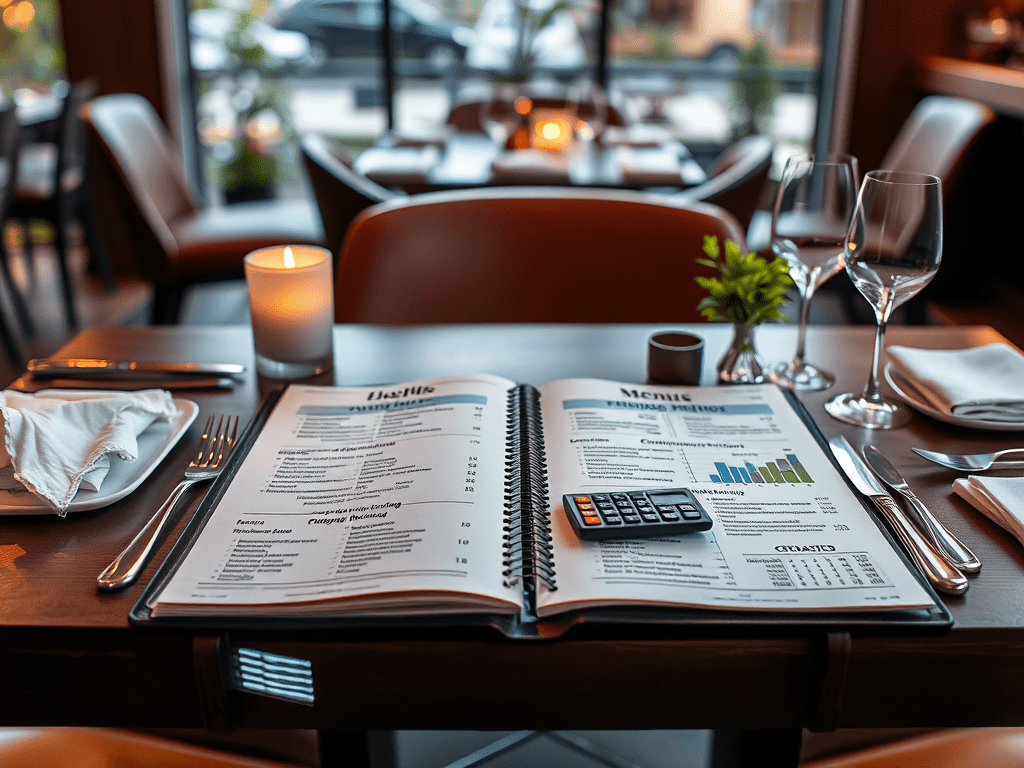
In the competitive landscape of the hospitality industry, menu pricing plays a crucial role in determining profitability, attracting customers, and maintaining a competitive edge. A well-executed pricing strategy takes into account various factors such as cost, competition, consumer psychology, bundling options, and dynamic pricing to strike the right balance between revenue generation and customer satisfaction. In this article, we’ll explore five key menu pricing strategies and how they can be effectively implemented to drive business success.
1. Cost-Plus Pricing:
– Cost-plus pricing involves calculating the total cost of ingredients, preparation, and overhead expenses, and then adding a desired profit margin to determine the menu price. While straightforward, this approach ensures that all costs are covered and provides a consistent basis for pricing across menu items. However, it may not take into account market demand or competitive pricing dynamics.
2. Competition-Based Pricing:
– Competition-based pricing involves benchmarking menu prices against competitors in the same market segment. By analyzing the pricing strategies of similar establishments, hospitality businesses can adjust their prices to remain competitive while still ensuring profitability. This approach requires ongoing monitoring of competitors’ pricing and may involve periodic adjustments to stay aligned with market trends.
3. Psychology Pricing:
– Psychology pricing leverages consumer behavior and perception to influence purchasing decisions. Strategies such as pricing items just below a whole number (e.g., $9.99 instead of $10) or using “charm pricing” (e.g., $9.95) can create the illusion of a better deal and increase sales volume. Additionally, highlighting certain menu items as “premium” or “exclusive” can justify higher prices and enhance perceived value.
4. Bundle Pricing:
– Bundle pricing involves offering multiple menu items as a package deal for a discounted price compared to purchasing each item individually. This strategy encourages upselling, increases average transaction value, and enhances perceived value for customers. Bundling options can be tailored to suit different customer preferences, such as prix-fixe menus, combo meals, or meal deals with add-ons.
5. Dynamic Pricing:
– Dynamic pricing involves adjusting menu prices based on factors such as demand, seasonality, time of day, and even weather conditions. For example, restaurants may offer lower prices during off-peak hours to attract customers during slower periods or adjust prices for seasonal menu items based on ingredient availability and cost fluctuations. By optimizing pricing in real-time, hospitality businesses can maximize revenue and adapt to changing market conditions.
Conclusion:
A successful menu pricing strategy requires careful consideration of cost, competition, consumer psychology, bundling options, and dynamic pricing dynamics. By leveraging these pricing strategies effectively, hospitality businesses can optimize profitability, attract and retain customers, and maintain a competitive edge in the marketplace. Whether through cost-plus pricing to ensure profitability, competition-based pricing to remain competitive, psychology pricing to influence consumer behavior, bundle pricing to increase average transaction value, or dynamic pricing to adapt to changing market conditions, a well-crafted pricing strategy is essential for driving business success in the hospitality industry.






![The New Labour Codes — Deep Dive for the Hospitality Industry [Article 2]](https://hospitalityherald.com/wp-content/uploads/2025/11/image-3.png?w=1024)
 Hospitality Herald
Leave a comment