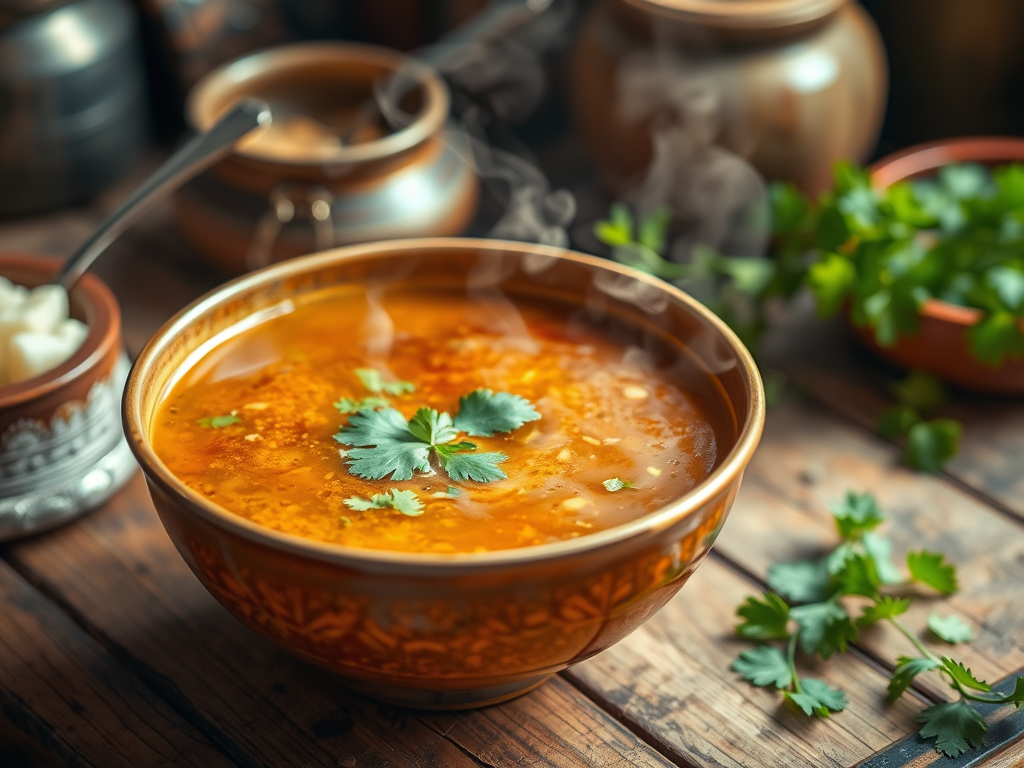
Rasam is a traditional South Indian soup known for its tangy, spicy flavor and its comforting, light broth. It has been a part of South Indian cuisine for centuries, especially in Tamil Nadu, Andhra Pradesh, and Karnataka. The word “rasam” is derived from the Sanskrit word “rasa,” meaning “juice” or “essence,” which reflects its origins as a simple, broth-like soup with the essence of spices and tamarind. Initially, rasam was prepared as a digestive aid due to its warming spices and tart tamarind, and over time, it became a staple on South Indian dining tables.
Health Benefits of Rasam
Rasam is not only delicious but also incredibly healthy. Its core ingredients—tamarind, black pepper, cumin, garlic, and turmeric—are known for their various health benefits:
- Aids Digestion: Tamarind and black pepper stimulate digestion, making rasam an excellent meal starter.
- Boosts Immunity: Turmeric, rich in curcumin, has anti-inflammatory and antioxidant properties that support immune health.
- Improves Circulation: The spices used in rasam promote blood circulation, which can help in keeping the body warm, especially in colder weather.
- Packed with Nutrients: Garlic, curry leaves, and other spices are rich in vitamins, minerals, and antioxidants, supporting overall health.
- Low Calorie and Light: Rasam is a low-calorie, easy-to-digest soup, perfect for a light meal or snack.
How to Make Rasam for Four People
This recipe serves four and includes the classic ingredients and spices that make rasam tangy, warming, and delicious.
Ingredients
For the Rasam Base:
- 1 medium-sized tomato, chopped
- 1/4 cup tamarind pulp (or a small lemon-sized ball of tamarind soaked in water)
- 1/2 tsp turmeric powder
- 4 cups water
- 1 tsp salt (adjust to taste)
For the Spice Blend:
- 1 tsp black peppercorns
- 1 tsp cumin seeds
- 2-3 garlic cloves, crushed
For Tempering:
- 1 tbsp ghee or oil
- 1/2 tsp mustard seeds
- 1/4 tsp asafoetida (hing)
- 1 dried red chili, broken
- 5-6 curry leaves
- Fresh cilantro, chopped, for garnish
Step-by-Step Instructions
Step 1: Prepare the Tamarind and Tomato Base
- In a pot, add the chopped tomato, tamarind pulp, turmeric powder, and 3 cups of water.
- Bring this mixture to a boil, then reduce the heat to a simmer. Let it cook for 10-12 minutes, allowing the tamarind and tomato flavors to meld.
Step 2: Grind the Spices
- In a mortar and pestle (or small grinder), coarsely grind the black peppercorns, cumin seeds, and crushed garlic cloves. This spice blend adds a robust, earthy flavor to the rasam.
Step 3: Add Spices to the Base
- Add the ground spice blend to the simmering tamarind-tomato base.
- Add salt and 1 more cup of water, adjusting the consistency to your preference. Simmer for another 5-7 minutes until the flavors are well combined.
Step 4: Temper the Rasam
- In a small pan, heat ghee or oil over medium heat. Add mustard seeds, and when they begin to splutter, add asafoetida, dried red chili, and curry leaves.
- Pour this tempering over the rasam and mix well.
Step 5: Garnish and Serve
- Garnish with fresh cilantro and serve hot. Rasam can be enjoyed as a soup or poured over rice as a light, flavorful broth.
Rasam is more than a dish; it’s a fusion of health benefits, tradition, and flavor in every sip. Perfect for cool weather or whenever you crave something light and soothing, this tangy soup embodies South India’s culinary heritage. Enjoy it as a warming, immunity-boosting treat with your favorite meal!
#TraditionalRasam #SouthIndianCuisine #HealthySoups #ImmunityBoost #ComfortFood #RasamAndRice #SouthIndianRecipes #TangyAndSpicy #LowCalorieSoup #SpiceHealing #FoodAsMedicine #IndianSoup #HomemadeRasam #FlavorfulAndLight #RasamLove #Wilsonpselvam #WilsonPanneerselvam #HospitalityHerald #Varisound #FullKattu







 Hospitality Herald
Leave a comment